

LISTLESS: Eighth Grade Cinema
on being a poser

Hey pals, long time no see. This is a solo post, but was very nearly a none-at-all-post. Molly and I had been working for months on a “Double Feature” …feature, where we set a theme and picked a pair of movies. We got a lot done on those essays, but found ourselves treading in pretty difficult emotional waters; who knew that we’d unintentionally be digging into the rotten parts of our past that echo most loudly in our present?
Molly got stuck while talking about one of the best representations of social anxiety1 ever put to film (Bo Burnham’s Eighth Grade), and I struggled to maintain narrative clarity regarding the slow-burn gender epiphany I’ve been having since the start of this newsletter.
I decided to scrap my essay, too, and write something about not writing something, but that quickly morphed into another essay on the same old shit. Wherever you go, there you are, etc. etc.
So here it is, clear narrative or not. Hope it’s okay.
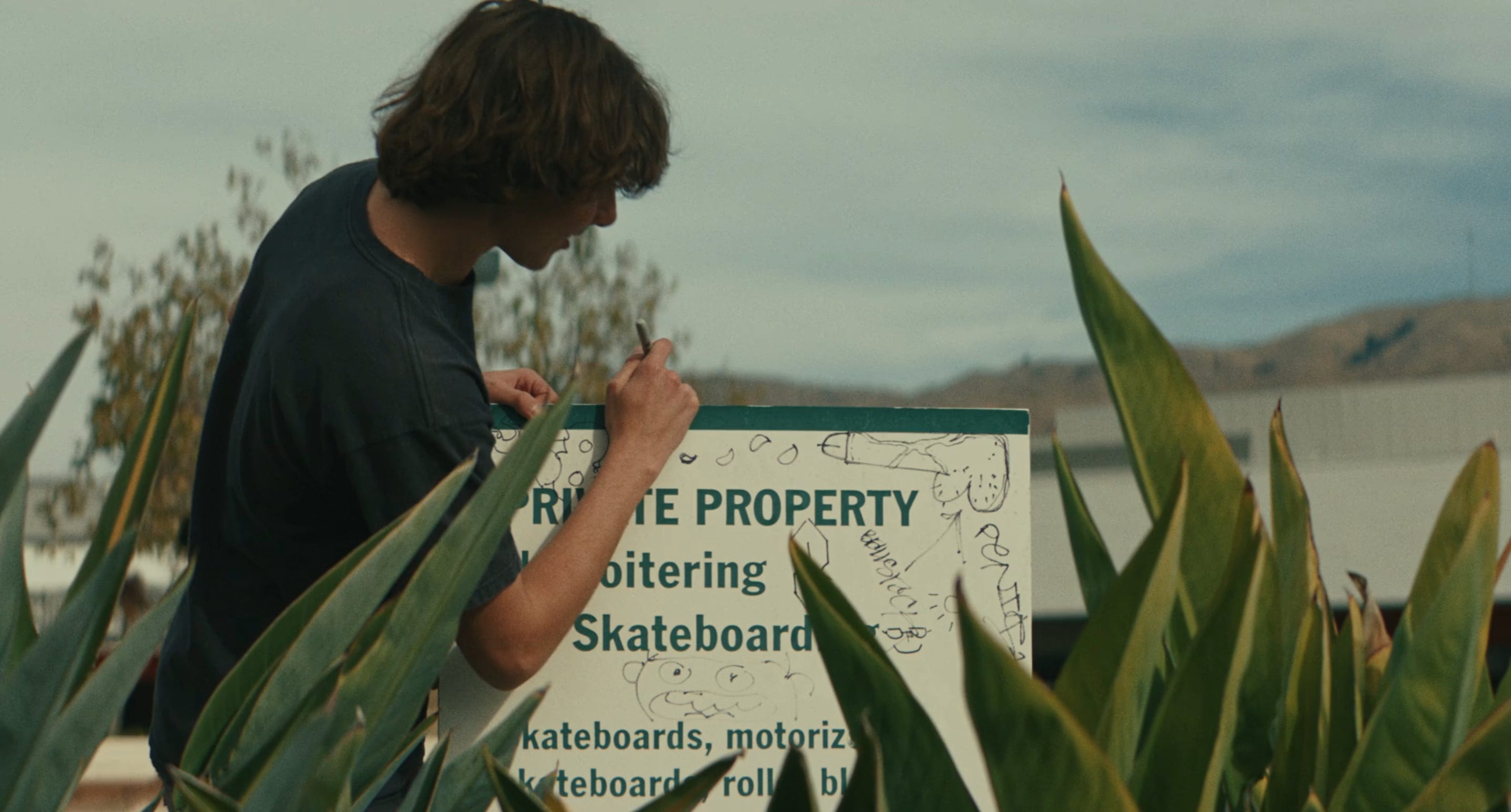
[Emily]: During the first summer of the pandemic, someone spray-painted two gigantic dicks on a street in our neighborhood. I became obsessed with them. They looked like this:
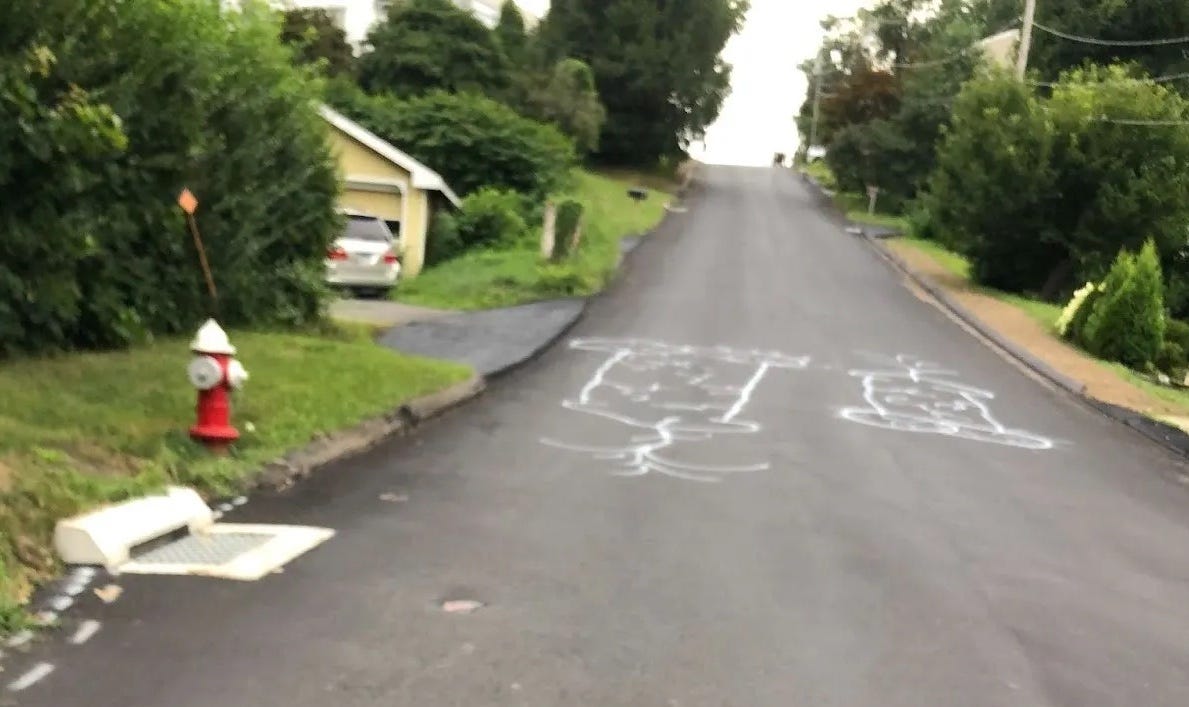
At the time, there wasn’t much you could do outside of the house and in the real world because of the possibility of contracting a mysterious airborne respiratory illness that could potentially kill you. In my personal life, I had a kid that needed to start pre-K, my dad was about to be moved into hospice, and I was prepping to teach a fully-online class designed to foster connection among college freshmen despite the fact that we couldn’t even make them turn on their cameras.
To make life semi-bearable, we went for short car rides to get coffee. Coming2 upon the dicks was like a kind of miracle. Someone was finding some joy, some meaning in life. We drove by them as often as we could, and then, bam, they were gone. I felt sad, so I wrote about them3.
I had not realized until recently that the project I’ve been working on for the past year is, in so many ways, the fictional version of the dick story. There is a line in the HAD thing about the teenage boys I picture doing this—“sometimes I imagine them falling in love”—and my novel is that story.
Besides the idea that I’m writing about characters I conceived of very loosely over five years ago, I also realized that, especially when I switched POV from 3rd to 1st, I was essentially as close to experiencing adolescent boyhood as I ever would be. How do I explain why this hit me so hard? It’s difficult, but here is a comic by Samuel Luke I saw that made me cry.
As mentioned in the preface of this, and also in varying degrees of specificity in nearly every LISTLESS installment, I’ve been having a little bit of a gender crisis. I feel comfortable enough now to say I’m nonbinary. Beyond that, I’m not sure how to label anything, and honestly, the previous sentence is the first time I’ve said it that plainly in writing. I haven’t done too much in public life to reflect this besides like, I don’t know, start wearing Dickies again, but in May I got radical reduction top surgery, so that might force a couple things. At this point in time, call me whatever you want. Or, hey, just pretend I didn’t say anything at all.
Although I’m nervous talking about a work in progress—both my creative output and the existence of my body—I need to connect a few things.
I’m working on two longer projects, actually: this novel, which has been really fun to write, and then a nonfiction collection, which spans a similar time period of my real life, from ages 11-16. That has not been as much fun to write, but I hope that by doing so, I can let go of a lot of the pain I’ve held onto for the last 25 years.
It turns out that writing a whole short story collection about the relationships between women and girls, especially adolescent girls, and talking about it a bunch in interviews and podcasts forced me to confront some things about myself, confirming the lonely, often alien-like feeling I experienced in my own adolescence. Now I’m trying to figure out what the other side of that looks like.
I wrote a ton in the prom issue last year about the ways I did not respect or care about my body as a teenager. But what I’m focused on now comes before all that, a point in time where I feel like, man, if I had just understood myself then, you know? If I had just loved myself. Of course it’s more complicated than that; immaturity, societal factors, abuse, and the aforementioned social anxiety, along with good old-fashioned self-hatred, couldn’t have allowed anything different to happen. So I’m honoring that version of myself now.
Writing the nonfiction work is essential to my own sanity, yes, but the fiction is somehow even more important. I’m learning about queer temporalities, the concept of a second puberty full of undoing/redoing, of choice. And I’m finding a lot of solace, too, in revisiting the narratives of male adolescence that I’ve loved for so long, or seeking out new ones. I have a stack of books to read or reread this summer (will I reread The Catcher in the Rye for the millionth time….probably….) to more fully immerse myself in the world I’m writing into.
My viewing habits have been reflecting this as well. But, more specifically, I’ve been zeroing in on eighth grade.
Eighth grade is a special time. You think you’re on the verge of some great change, but really you’re just a baby. I’m shocked by how young I looked then. I remember already not feeling young. But that is one of its chief tensions: the first real pull between childhood and adulthood.
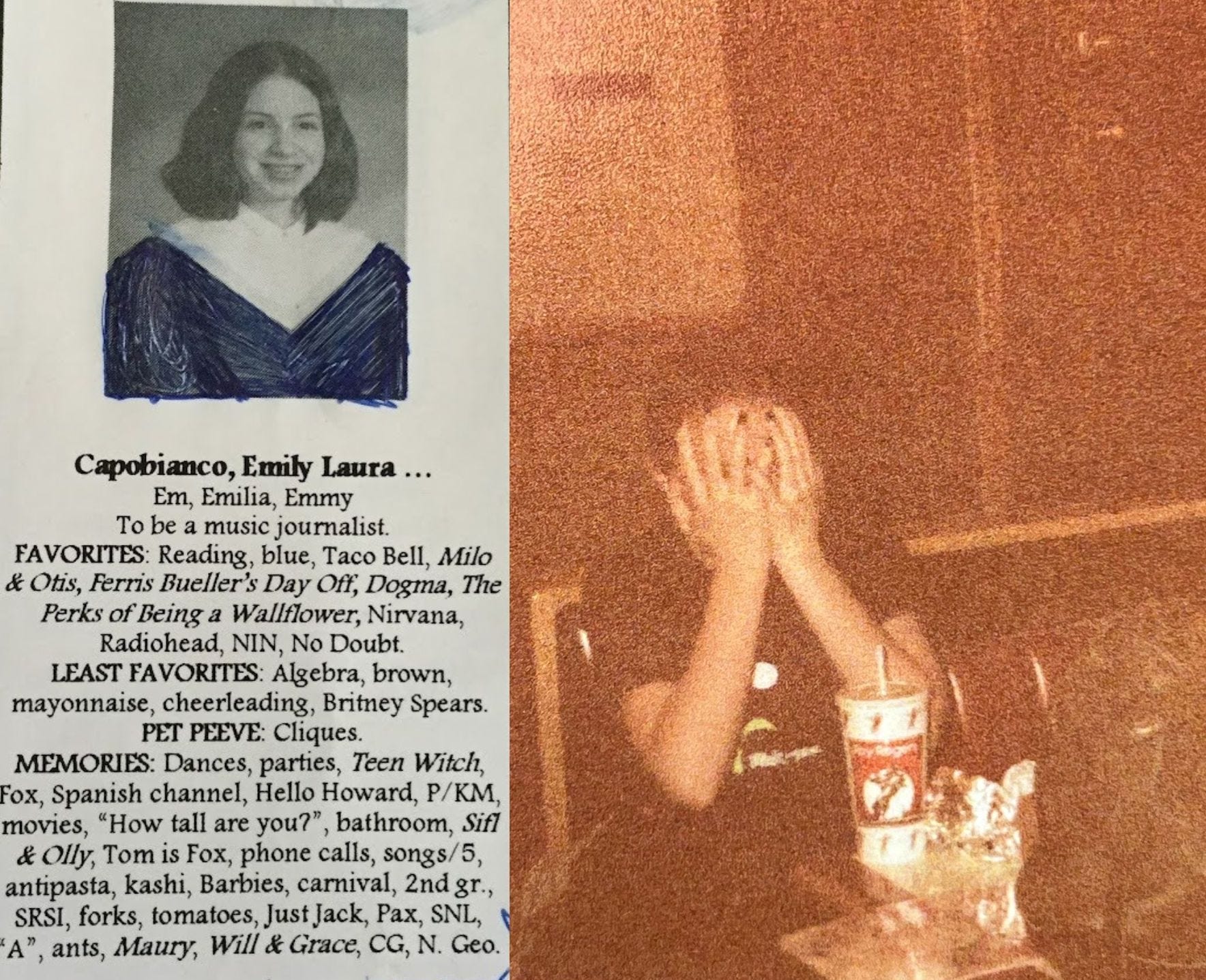
There are several films that have made my watchlist so far.
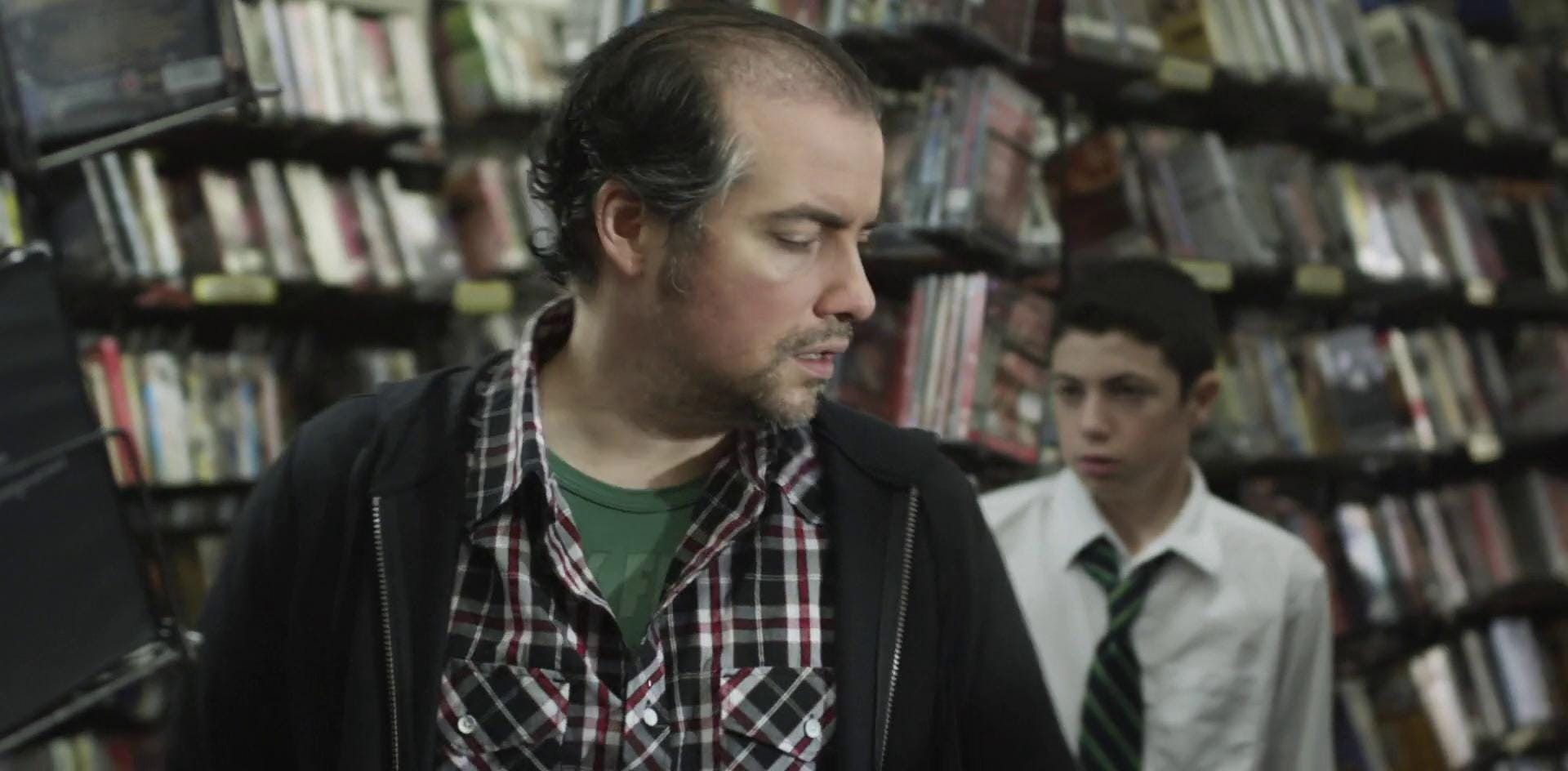
My novel is set in a Catholic school, which I’ve been dying to explore through other ways that aren’t creative nonfiction, that aren’t filtered through the pinched vise of my memory and might allow for more fun. Funeral Kings (2012) held a lot of promise premise-wise (not only Catholic school, but a video store!) but ultimately didn’t work for me, partly because it falls into a trap I’m hoping to avoid: dialogue overly-laced with profanity. In smaller doses, I think this works, as it’s a necessary and embarrassing part of being an early teen. However, this and other pushes toward edginess without fully exploring the stakes or characters left me wanting so much more. I don’t want to drag an indie too much, so I will note there are some cool elements, especially if you’re a Kevin Corrigan completionist.
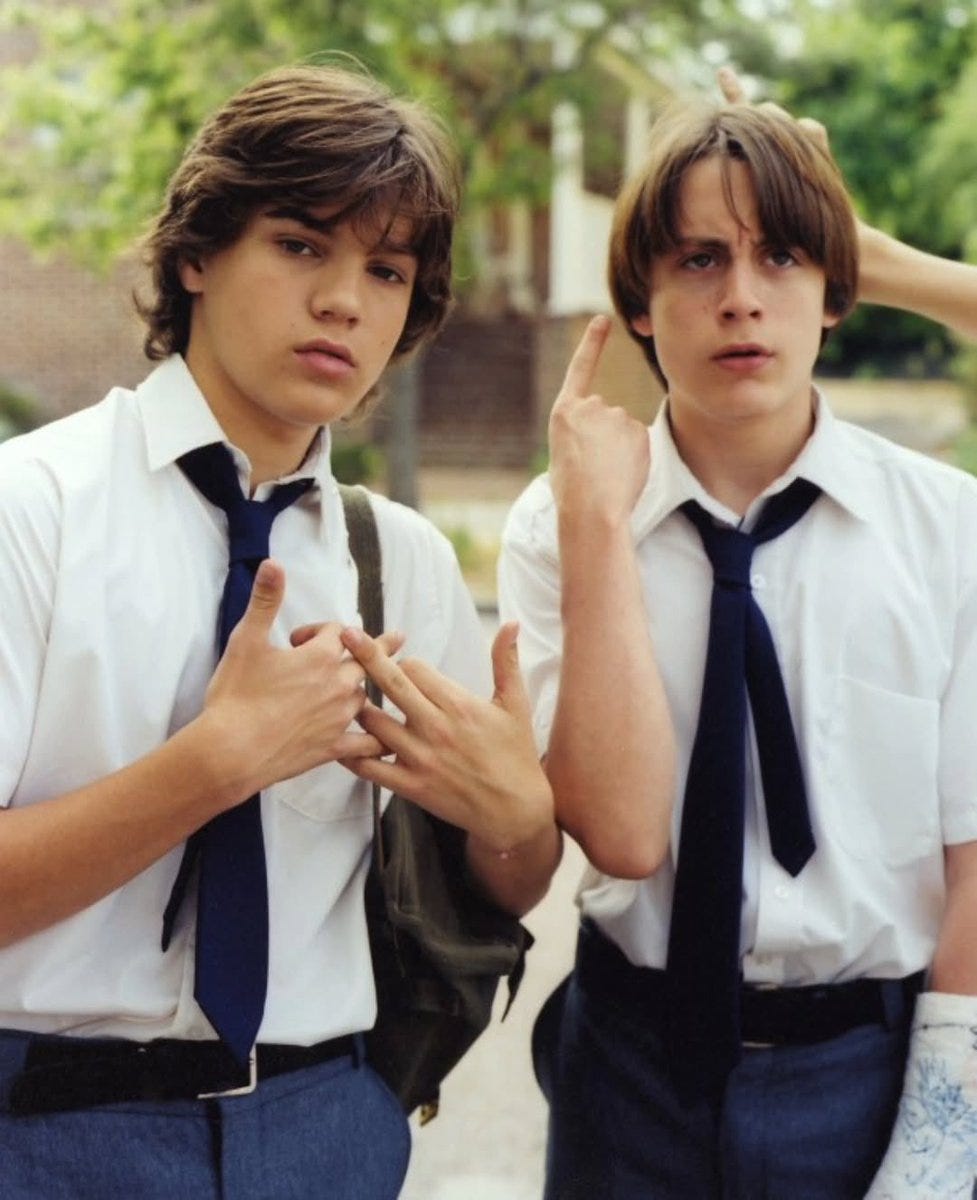
A much more surprising film I somehow hadn’t seen before is The Dangerous Lives of Altar Boys (2002). Everyone’s good, especially Kieran Culkin and Emile Hirsch, who are helped by pretty spectacular and believable dialogue, and the tension between their characters feels legitimate and complex: two friends navigating the strict environment of Catholic school and the exterior pressures and dangers of home life. Some wild plot stuff happens but I think it’s handled well overall, and the world’s texture and lived-in feeling balance the more shocking. I’ve got the book on deck, only just learning about its existence and the death of Chris Fuhrman in a brutal one-two punch.
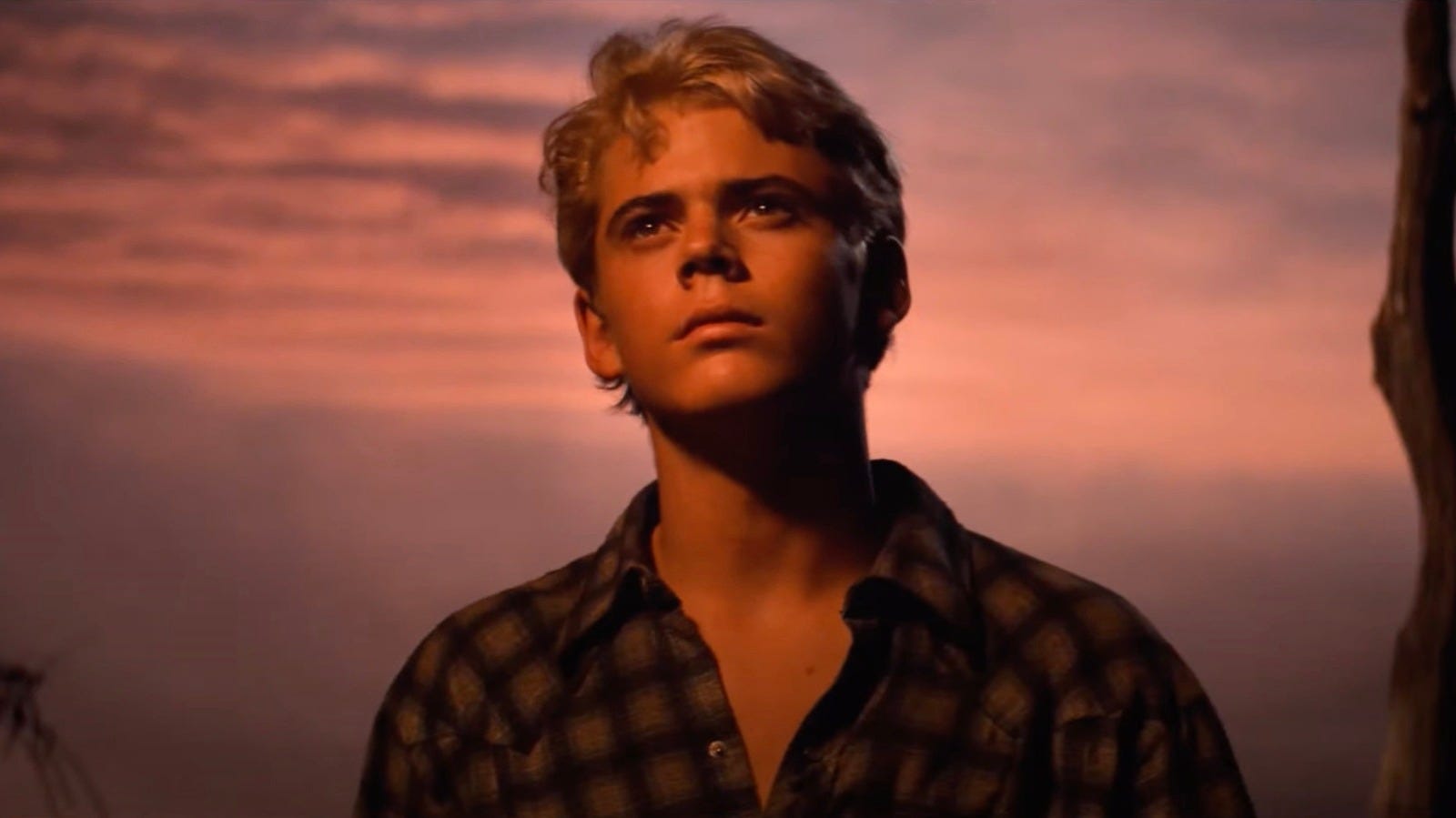
There are more, of course, these younger coming-of-age stories, and feel free to recommend them to me if you read this. Despite the slight age discrepancy, I’m probably going to rewatch Stand By Me once I’m a little more emotionally stable, and to rectify an embarrassing blindspot I finally saw The Outsiders. I’m also reading the book right now—I have no clue why it wasn’t taught in my high school, but maybe I should be grateful, as it would’ve likely become my whole personality and/or might’ve caused my rockabilly phase to start earlier.
Anyway, I’ve been really preferring close character study to more ensemble-focused films, as I find this allows for more depth in identity exploration, which has been especially helpful in whatever I’m going through, and writing through, right now.
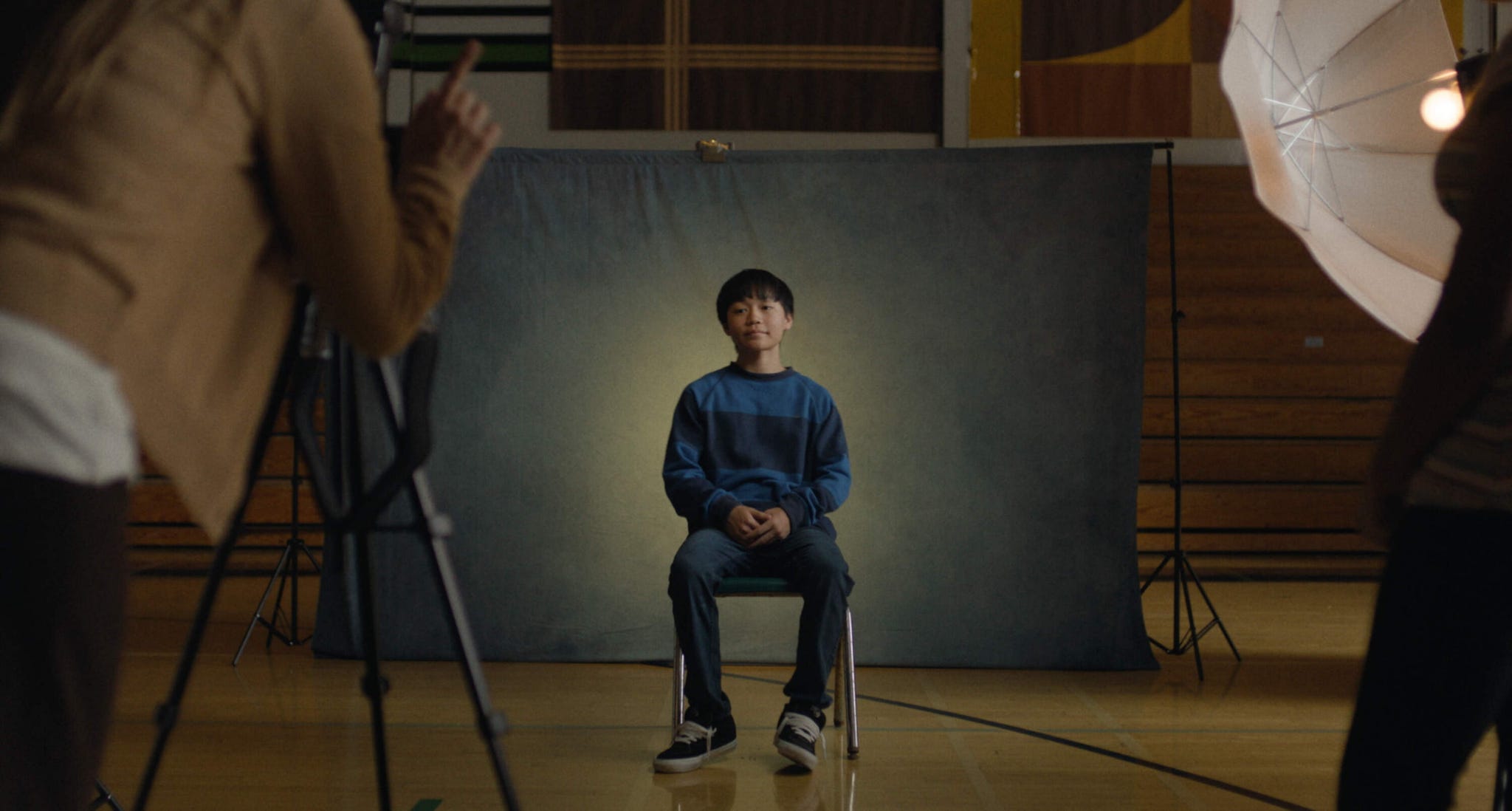
In Sean Wang’s 2024 coming-of-age film Dìdi, there is so much of this exploration. Set in 2008, the film focuses on Chris, a first-generation Taiwanese-American, called Dìdi by his mom and Wang-Wang by his friends, as he tries to survive the summer before high school. Conflicts range from being knocked out of his best friend’s MySpace Top 8 to experiencing several crushing instances of racism, micro-aggressions lobbed at him by friends and a potential love interest, and, occasionally, self-inflicted. To be clear, I’m not intending to posit my own gender troubles as comparable to the racism Chris experiences, or his life as the child of immigrants. This is a crucial part of this film, but it’s woven so perfectly into a story that reflects identity struggle in all its iterations, especially that liminal space between child and adult.
To me, what makes Dìdi stand out in the pantheon of coming-of-age film is the heartbreakingly realistic way Chris navigates his adolescence, how he makes so many decisions that make his life worse, and how these decisions don’t ever result in some huge life or death moment; instead, they are mundane and normal and relatable, yet so quietly devastating, especially in their accumulation. In this way we come to understand and know his character deeply, and it’s also the same type of character development that occurs in Molly’s choice, the brilliant Eighth Grade.
However, when I think of companion pieces to Dìdi, I think of mid90s. That film, despite its moving golden-hour Morrissey skate scene, left me frustrated with the same sort of forced edginess4 mentioned earlier, and similarly, big swings would have worked for me if we got to know the characters on a deeper level. I think overall it works well enough, though (and also the soundtrack is great).
But there are moments of overlap worth noting. Both contain scenes where the main protagonist freaks out at his mom in a car, the mother-son relationship in each a significant element in the film. I wish the mother in mid90s moved beyond a fairly stock depiction, which is honestly my main gripe with the film. In Dìdi’s case, because of the depth of character, the freakout scene is way more fruitful. Played by Joan Chen, Chris’s mother Chungsing is a painter, although not measurably successful; her husband is abroad and sending home money; her mother-in-law blames her for everything and her kids are so, so mean to her. While both performances from the child actors are outstanding, the characters’ complexities in Dìdi make that the stronger scene for me.
There are other similarities that are important universal coming-of-age tropes, including a way-too-intense house party, but the other large overlap is skateboarding, and how it exists as a subculture each character explores peripherally and alone before ultimately making the brave move of approaching a group of cool older skaters for acceptance or rejection.
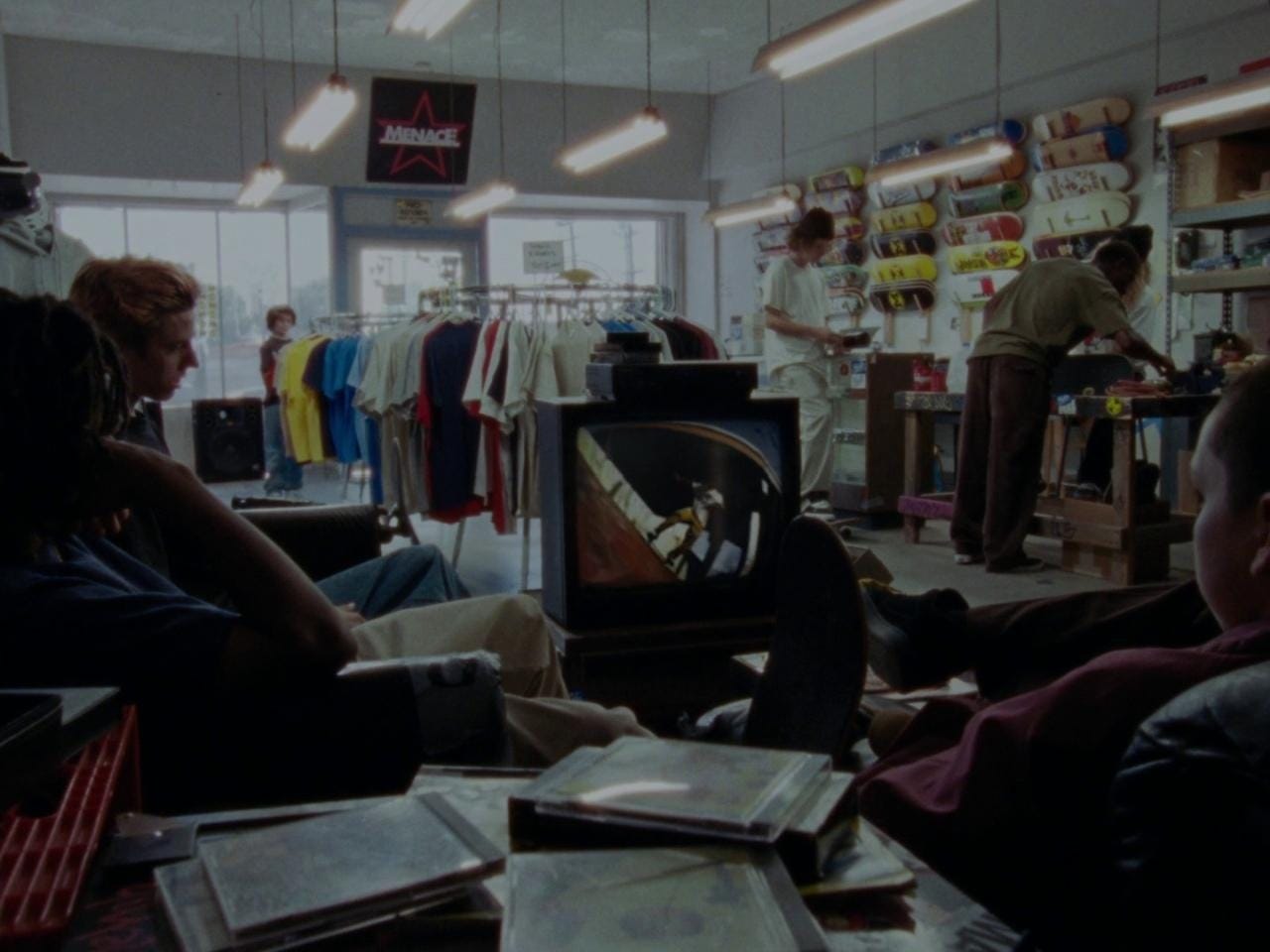
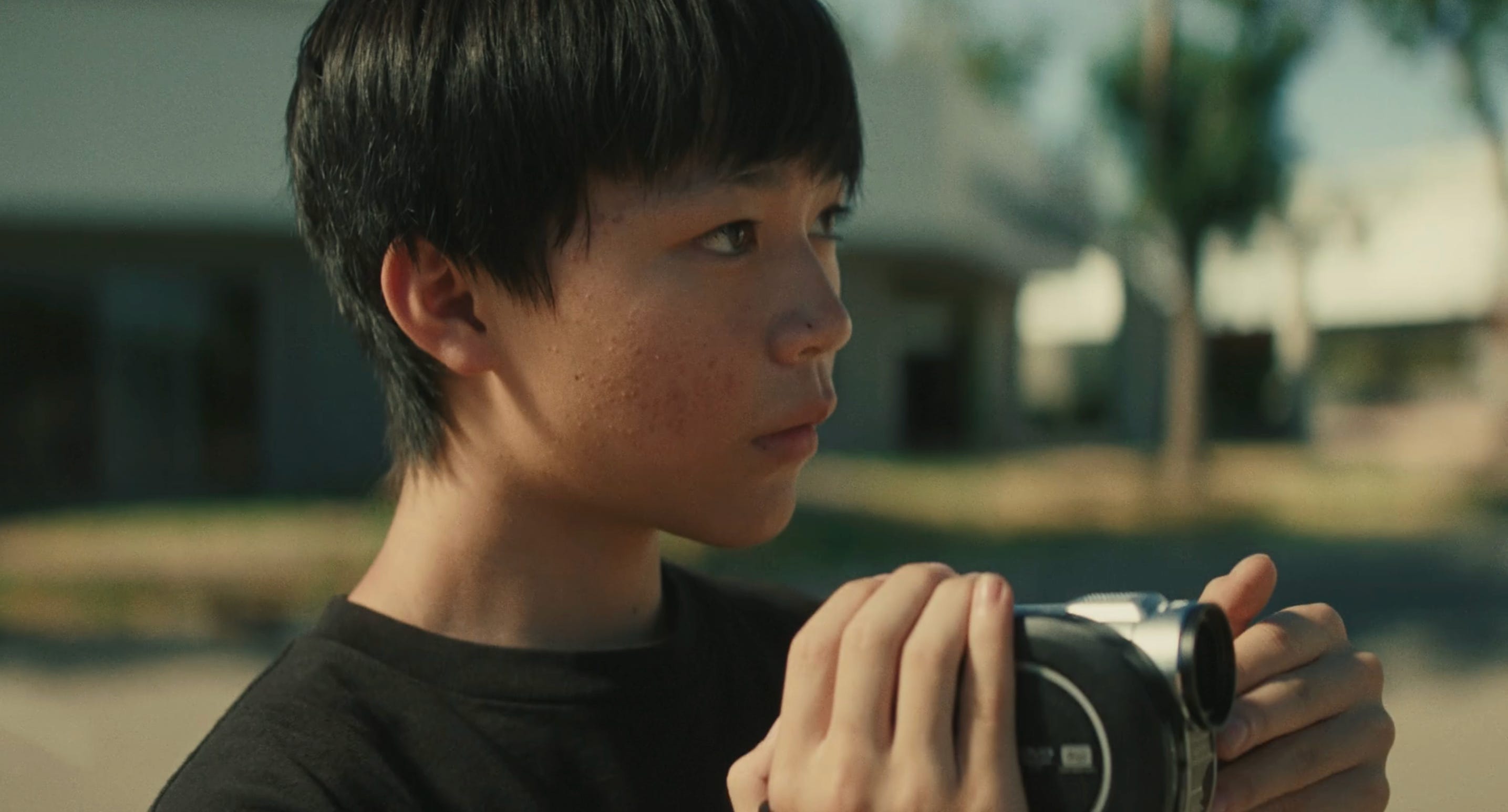
In mid90s, Stevie’s acceptance within the skater group comes eventually, partly achieved through the sacrifice of his own body when he severely injures himself jumping from one roof to another. In Dìdi, Chris’s acceptance is fleeting, eventually dashed by self-sabotage. It starts off hopeful: he joins the group because he says he can film, a half-lie we see in his frantic Googling, but we get the same lovely skate montages as in mid90s, the hangouts, the slow-motion joy, the rumble with authority.
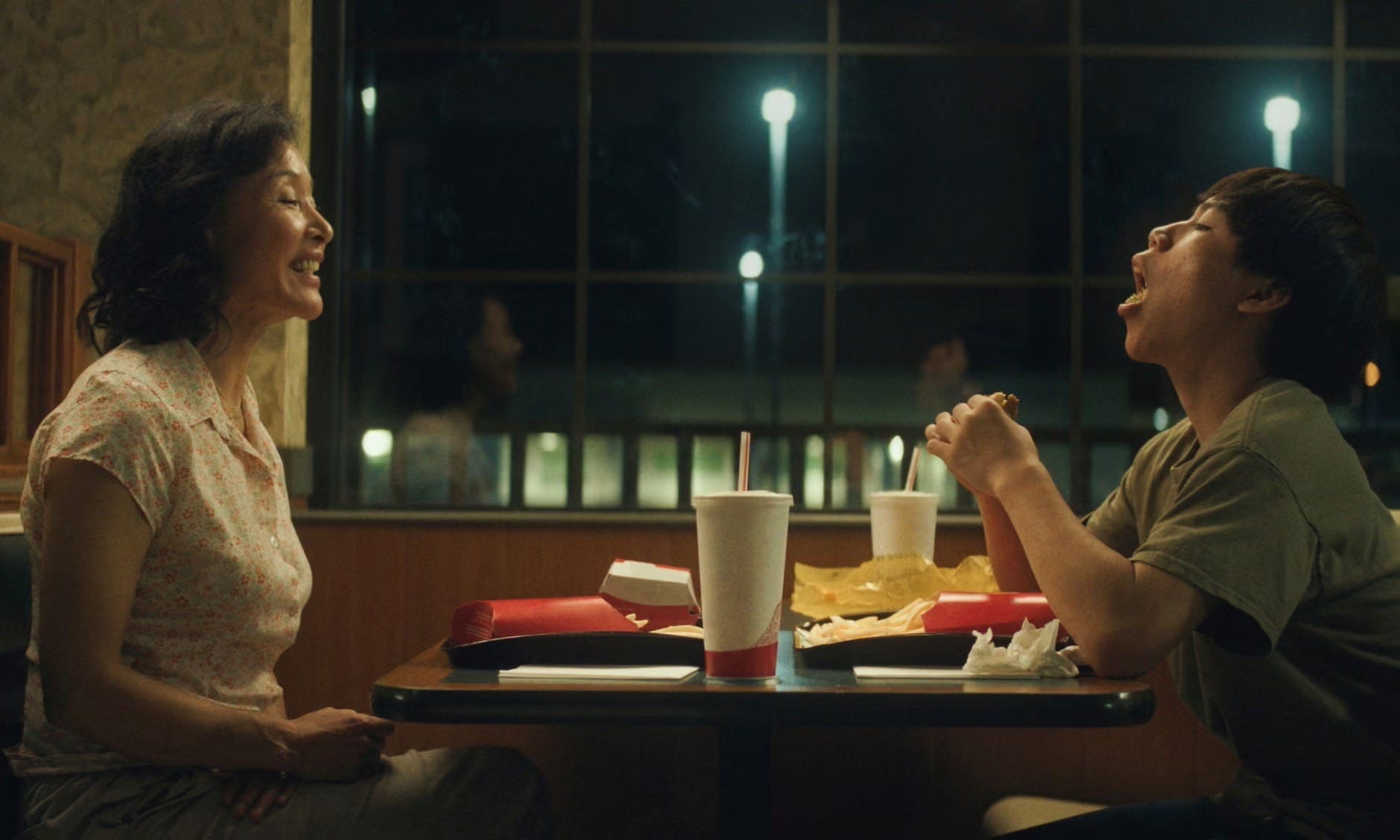
The final moments of this film mirror those of mid90s, too, but instead of group acceptance, Chris seems to finally accept himself, and his experimentations with identity ultimately bring him back to those who know him best—his family. On a second viewing, I really appreciated his sister, Vivian’s, arc, her chaotic bursts of anger toward Chris subsiding, smoothing out in maturation, once the stakes more fully reveal themselves. She drops her animosity and supports Chris, and their bond is cemented when she leaves for college. In a similar fashion, after having it out with his mother and running away only to come back and wonder why she didn’t look for him, Chris gets some semblance of resolution. He understands how much his mother loves him for who he is, and I find the final moment, where they sit close while eating, looking deep into each other’s eyes, so moving.
But I want to go back to the Googling scene. Molly texted me recently from her video store job:
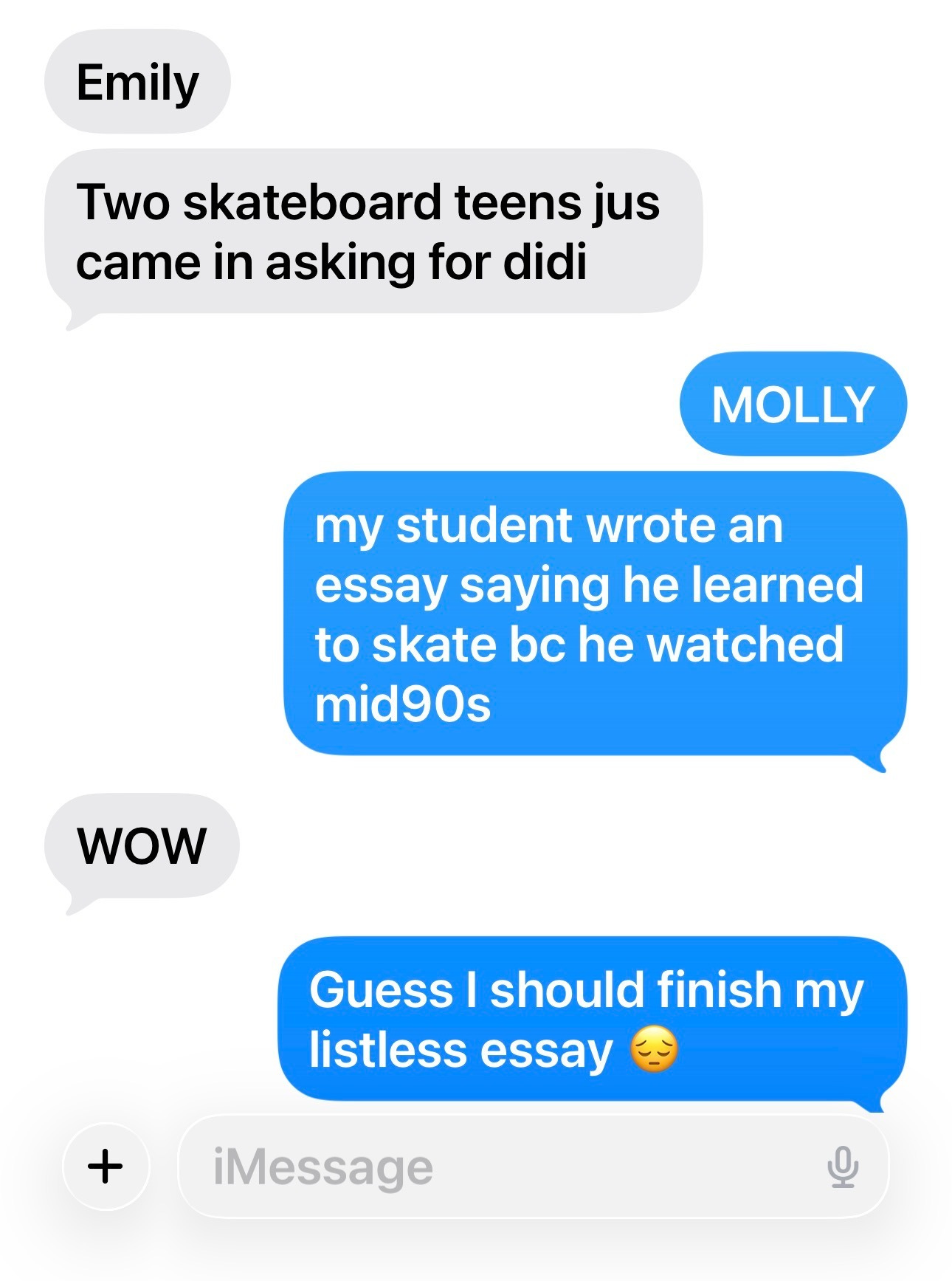
I’m going to admit something embarrassing. If there is any culture I’ve annoyingly hovered around without being a true part of it, it’s skateboarding. No one around me skated growing up. We rollerbladed at a rink, and we were on bikes all the time, but skateboarding just wasn’t a baked-in thing in our immediate area, maybe because our houses were packed into steep hills, and a flat driveway, if any driveway, in which to learn how to skate seemed rare. Is that what you’d even need? I don’t fucking know!
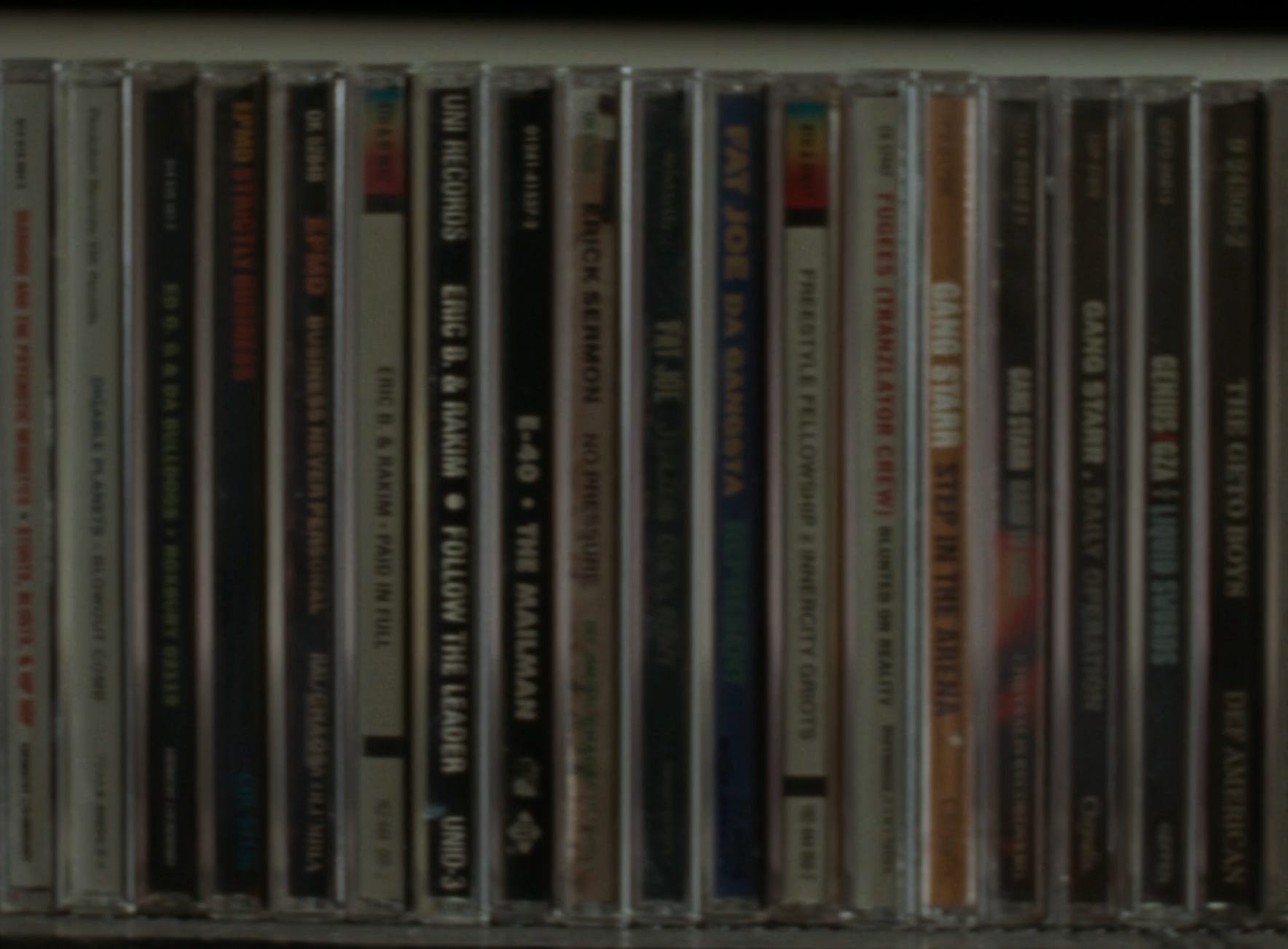
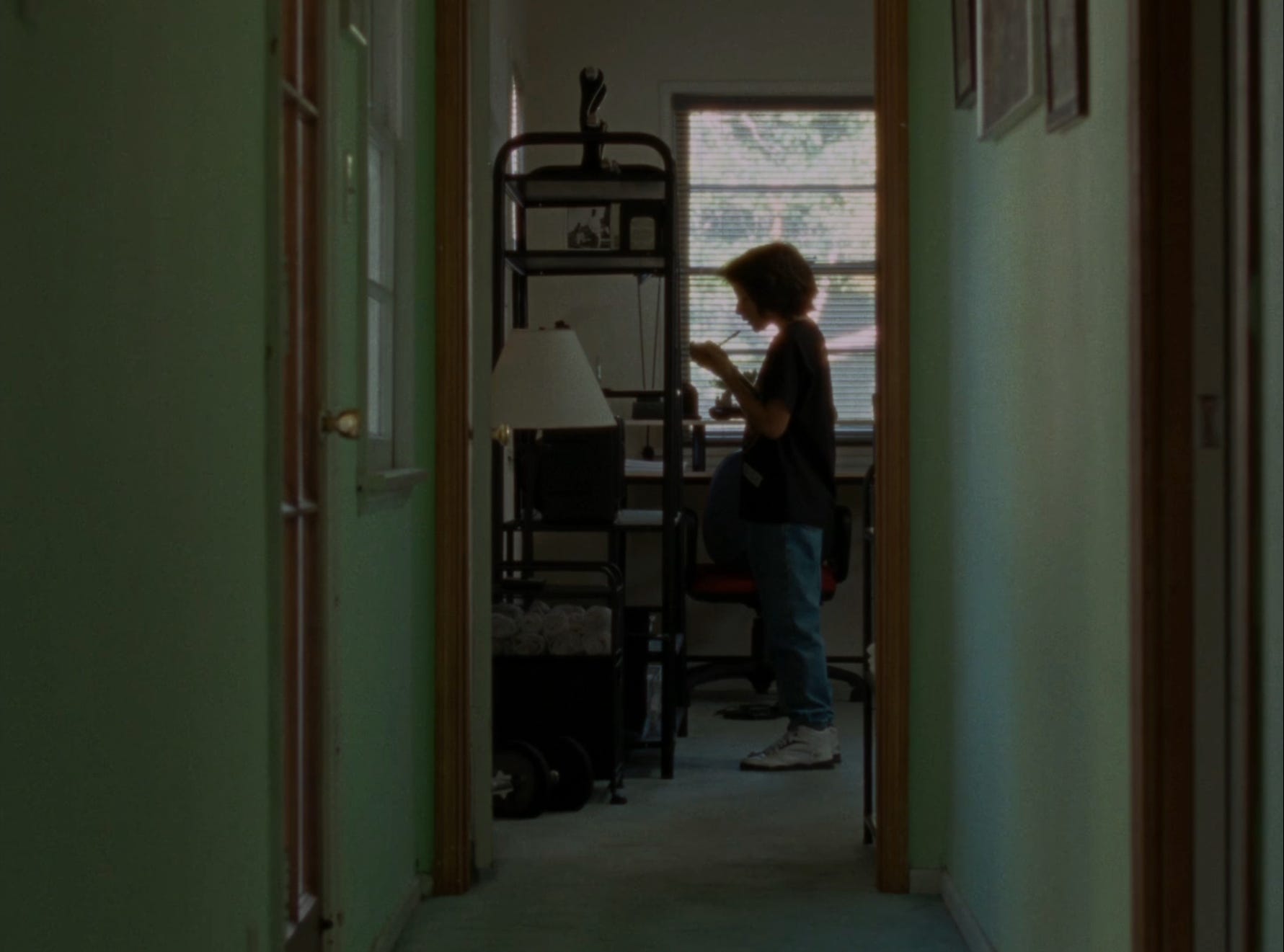
An experience my partner and I both had in Catholic K-8 was that when you liked things that were slightly different from the predominant school culture, no matter how mainstream these things actually were, kids called you “alternative,” but they also called you a “skater,” even if you did not skate. These were interchangeable terms for some reason, said with a weird level of derision. This idea died off immediately once we left the cesspool of sameness and conformity that was Catholic education/life, starting 9th grade at a public high school. There, nobody cared, and there were even a few real, live skateboarders.
But during those preteen and early teen years, I consumed the peripheral, watching Jackass religiously, listening to pop-punk, wearing Vans, and shopping at Pacific Sunwear. Also in my recent slew of epiphanies lies my understanding that it wasn’t quite that I wanted to be with the boys I saw participating in this culture—I wanted to be one of them. But there is this trap when you are a girl in this sort of scenario, which is everyone (including even you yourself!) thinks you might be adapting these preferences for male attention5.
A quick note on that, minus about fifty paragraphs I deleted: a term that’s been floating around the internet lately is “older brother core.” There are video collages immersing you in this aesthetic, and then there are the explainer videos, because if there’s one thing we feel we must do these days, it’s pick apart and drain any experience of its pure feeling by labelling and categorizing, and, if possible, monetizing it. I get that first impulse—this is LISTLESS; that’s kind of our thing, too—but I’m not a fan of a young person telling me how it was back then during years they didn’t experience. I’m for sure interested in the ways nostalgia poisons our view of the past, but this is some other, weirder version of that. Anyway, “older brother core” is something that simultaneously comforts me and shuts me out.
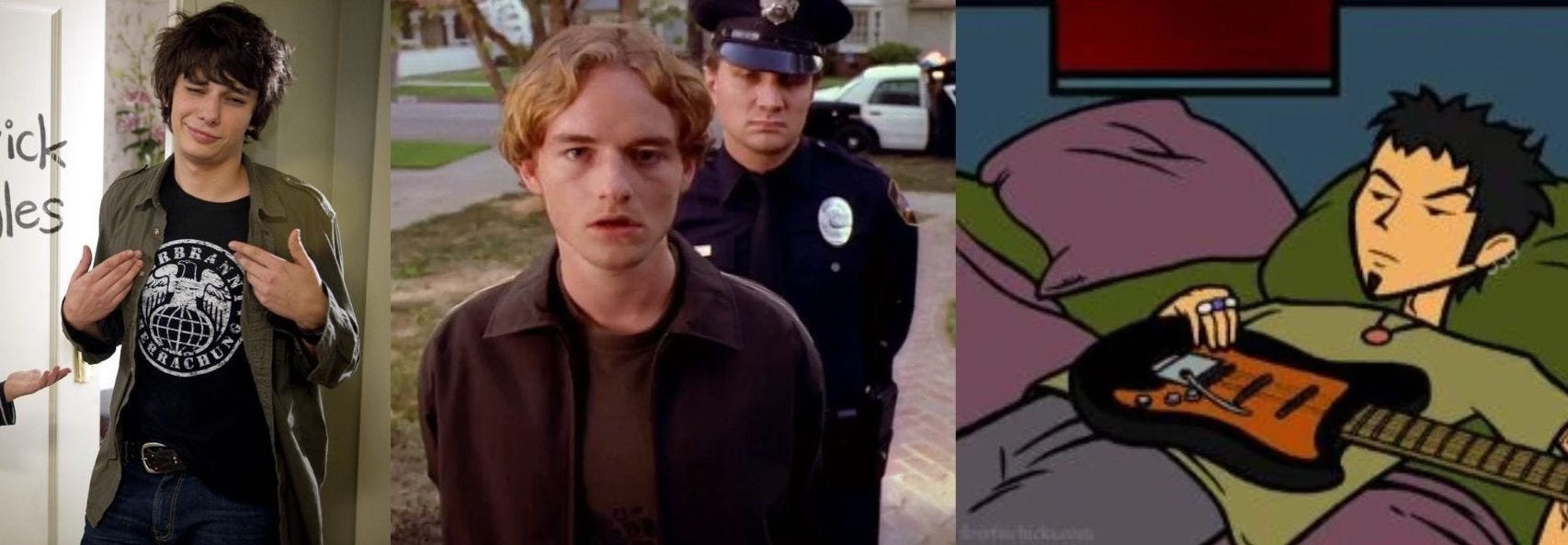
As an older sibling who loved what these internet people label as male-coded, it brings up those still-painful feelings of how liking “boy stuff”6—weirdly gendered pop culture markers7—while unsure about my developing body felt isolating, and how many of the interactions I had then were a kind of going-through-the-motions of gender expectation. This isn’t some great revelation. It just fucking sucks.
And then, even if we’re able to move beyond those gender “rules,” there’s the adolescent fate worse than death: you might be seen as a poser.
So I find myself, at 38 years old, deep in my heart, a true poser. An alternative skater who does not skate, an older sister who has always felt like an older brother, a mother who bristled at every biological thing my body did to grow and nourish a child. There is this rip inside of me that won’t heal, but in sorting through this shit, in writing, I am trying so hard to heal it.
This is why Chris Googling stuff like “what skaters say” hit me so hard. These are the moments we do in private, the research and practice before sincere attempts at belonging, secrets that would expose the deadly teenage sin of earnestness. I yearned to skate because it seemed so freeing, but I lack(ed) the bravery it requires. And I relate to Chris because he can’t get it right; he idealizes but can’t quite achieve. My own online searches have been equally embarrassing lately. Am I doing the same thing in idealizing an imagined idea of boyhood, of early masculinity? Absolutely. And listen, I understand the horror and toxicity that boys and men experience, too, whether inherent or learned. I get it.
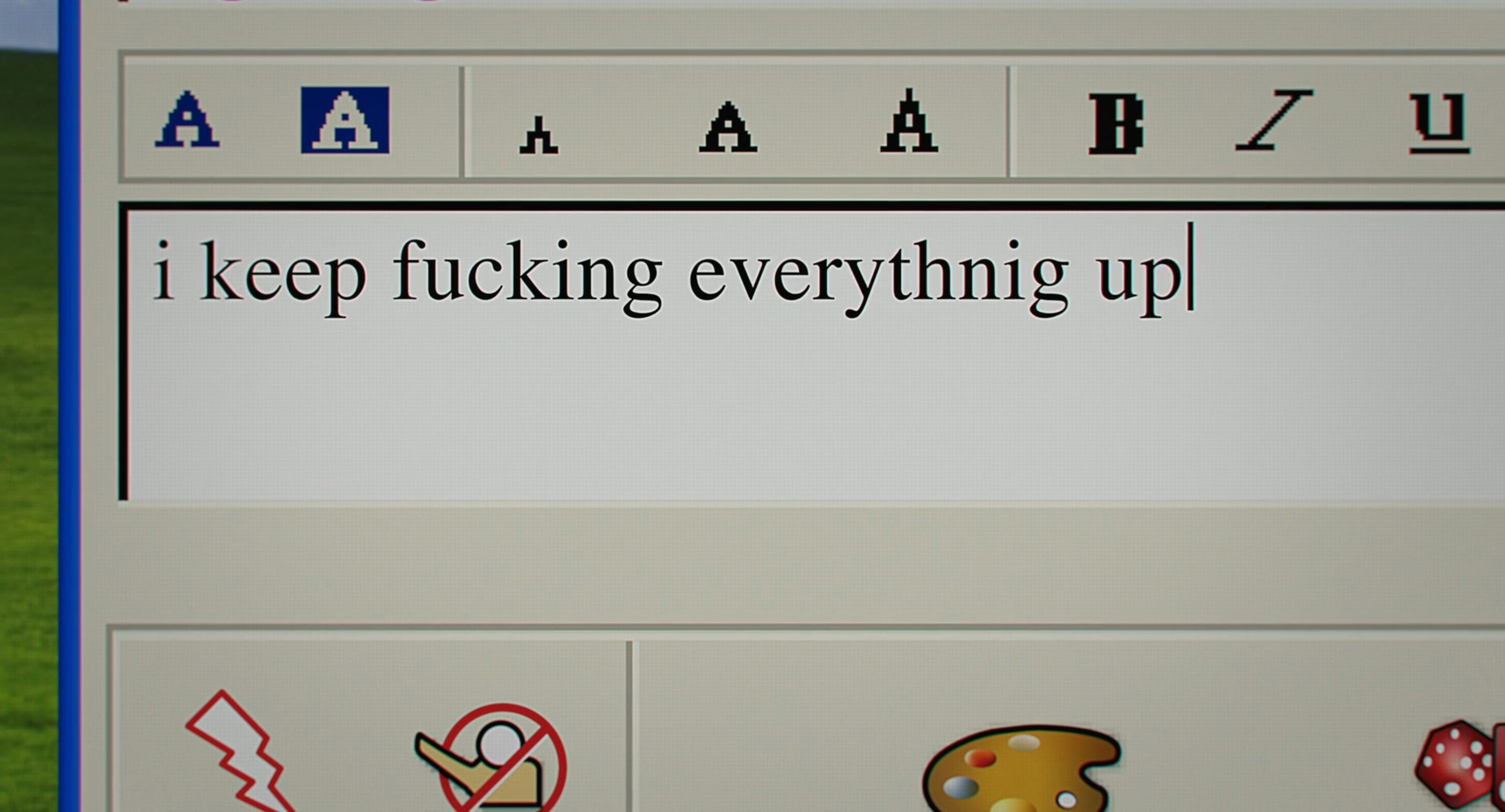
But maybe growing up is always a horror in some ways, no matter the gender you inhabit during it, that sometimes we are just lucky to make it out alive.
And so if this is a second chance, some low-level redo I’m enacting through art to support whatever is going on physically and mentally with me, I’m going to try to embrace the discomfort instead of burying it, and I’m going to seek out the narratives that might help me do that.
if you like seeing social anxiety on film, go watch Frownland asap and then please talk to me about it
sorry. hey while I’m here though, how great is the phrase “cock and balls of antiquity”? also feels relevant to note that I watched Querelle for the first time a few months ago
I saw many Letterboxd reviews mention how it’s Jonah Hill trying to do Kids…
they’re gendering Taco Bell btw
oh, hey, we’re STILL doing this, actually!
This resonates hard. I came to understand myself as nonbinary, in my early 30s, through writing fiction. Ever since I was a kid, I'd always wanted to read and write gay boys in love (and be one), more than anything else. I made a zine exploring these origins in 2018, my #1 source is the novel "War Boy" by Kief Hillsbery, which you totally have to read if you haven't already. It's all queer skate punk culture, queer underground dance culture, and ecoterrorism.
A moment in eighth grade when a girl referred to me as "a freaky little skater": no idea how she intended it to be taken, and I have never been on a skateboard in my life, but all I remember is total elation at being seen, as a freak.
thank you!!!! i always feel nakedly spotlit by your writing on adolescence. so much here that i painfully and beautifully relate to i'm gonna text you